Visual Hierarchy
Designing a surgical planning application centered on utilizing X-rays to create precise patient-specific treatment plans requires meticulous attention to several critical factors to ensure its efficacy across varied operational contexts.
Hero Image
The image of the person dominates the visual space, drawing immediate attention. This serves as the focal point of the page, leveraging the celebrity appeal for engagement.
Branding and Messaging
The logo “Ultra Fiesta” and the tagline “MUSIC VIDEOS 24/7 IN HD” are clearly positioned to the left of the hero image. The size and positioning make the brand message clear and direct.
Mapping out the initial workflow using index cards is essential for systematically visualizing and refining actions and interactions in the surgical planning application. By breaking tasks into manageable steps and organizing index cards for each task and decision point, we ensure clarity, alignment, and efficient optimization. This collaborative approach ensures our design meets the specific needs of medical professionals, supporting seamless surgical planning and patient care.
Hardware Considerations:
Adapting the application to operate efficiently across different hardware setups, from standard desktop computers in consultation rooms to specialized medical-grade monitors in office settings, ensures consistent performance and usability.
By addressing these essential considerations—ranging from operational adaptability and workflow optimization to advanced functionality and intuitive user interface design—we strategically developed a surgical planning application that effectively supported medical professionals in achieving precise analysis and planning for improved patient outcomes.
How did we get there?
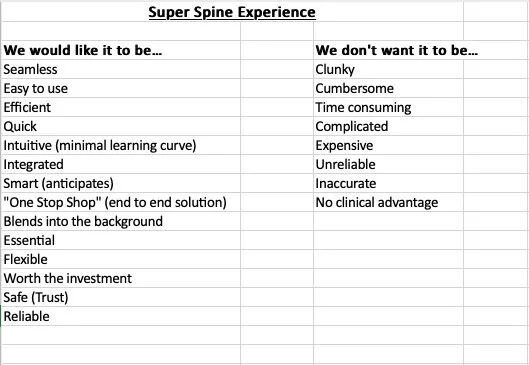
Identifying User Needs:
Begin by understanding the needs and preferences of the end-users, such as surgeons, radiologists, and other medical professionals. Assumptions are based on initial user research, which includes gathering feedback on existing tools, pain points, and desired functionalities.

Conceptual Design:
Begin with rough sketches and conceptual designs that outline the application’s basic structure and user interface. Focus on simplicity and clarity in presenting complex medical information.
Technical Feasibility:
Assess the technical feasibility of integrating X-ray imaging with digital tools for accurate segmentation and treatment planning. This includes understanding the capabilities of existing imaging systems and the potential for enhancement through software.
User Flows:
Develop user flows to visualize how different user personas will interact with the application. This helps in mapping out the sequence of actions and identifying key touchpoints for user engagement.
Wireframing:
Create low-fidelity wireframes to define the layout, navigation flow, and functionality of the application. These wireframes serve as a blueprint for the user interface design and facilitate early-stage feedback from stakeholders.
Initial Concept - Planning Application
Based on user input derived from workflow analysis and user needs assessment, initial concepts were developed utilizing the established design language from Stryker's Global Product Portfolio design system. This approach ensures alignment with industry standards and enhances familiarity for stakeholders. These concepts aim to integrate user feedback seamlessly, prioritizing usability and meeting the precise requirements of medical professionals in the surgical planning domain.
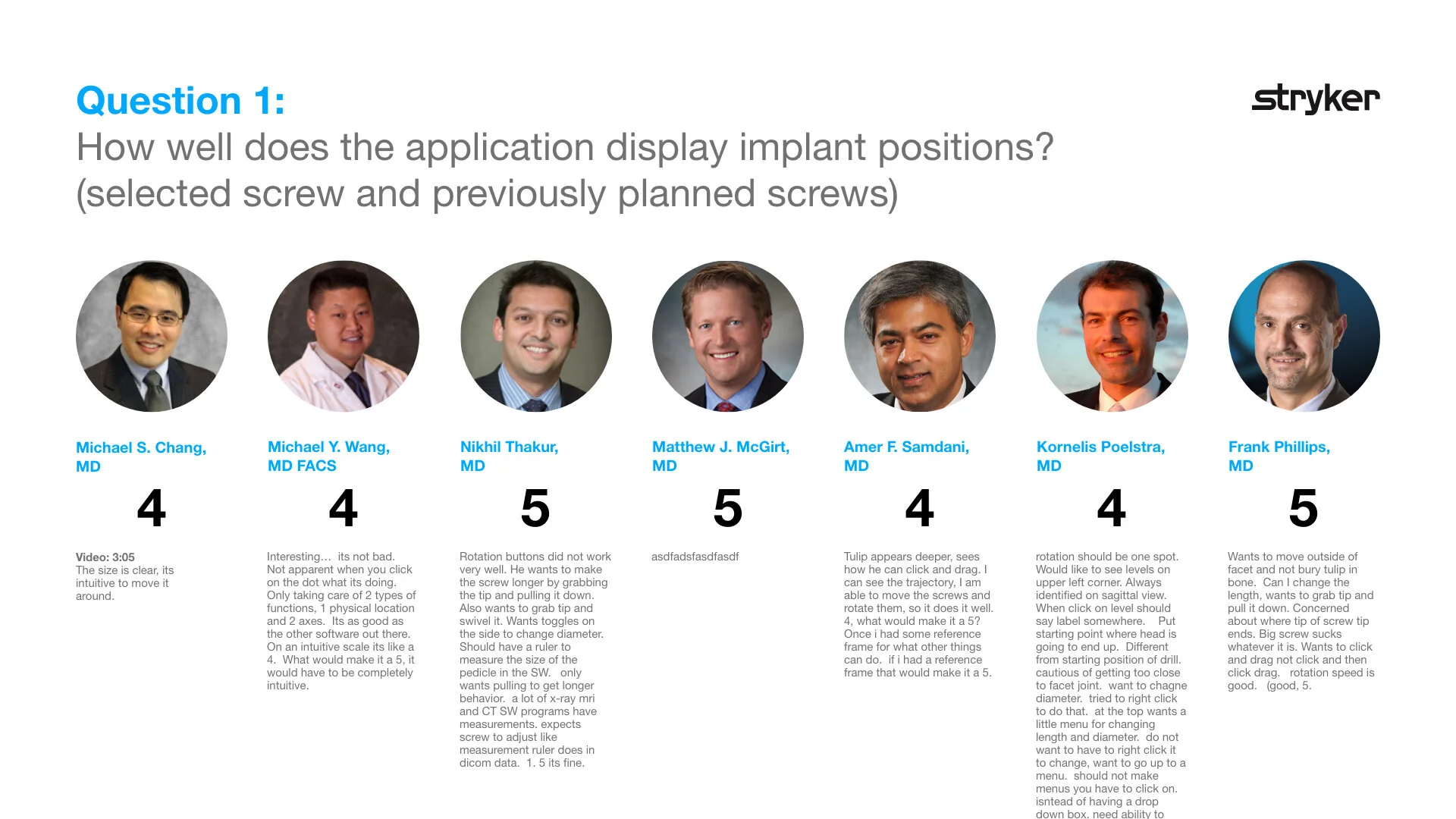
Usability Testing - Treatment Planning Spine Application
As a product designer in the medical device space, I prioritize usability testing to ensure our products meet FDA and ISO 62366 standards. This process allows us to simulate real-world use, identify potential issues early, and refine designs based on user feedback. By documenting these tests, we demonstrate our commitment to safety, effectiveness, and user-centered design, ultimately delivering products that enhance healthcare outcomes.